February 13, 2024
Mai House at Fort Kochi welcomed us with cool drinks to combat the scorching heat of the afternoon. A century old Syrian bungalow with blooming Bougainvillea’s ensconcing the entrance, just less than a km from Fort Kochi, and retaining its architectural stylings, Mai House was our home during our time in Fort Kochi.
Famished after our journey, we went in search of food and chanced upon Mary’s restaurant – an unassuming no frills terrace area with odd chairs and tables offering home cooked Kochi food. Past the lunch hour, a few tables were occupied with lone inhabitants devouring fish curry and rice. Given our coastal proximity, we decided on the same and were not disappointed with the fresh curry and spices.
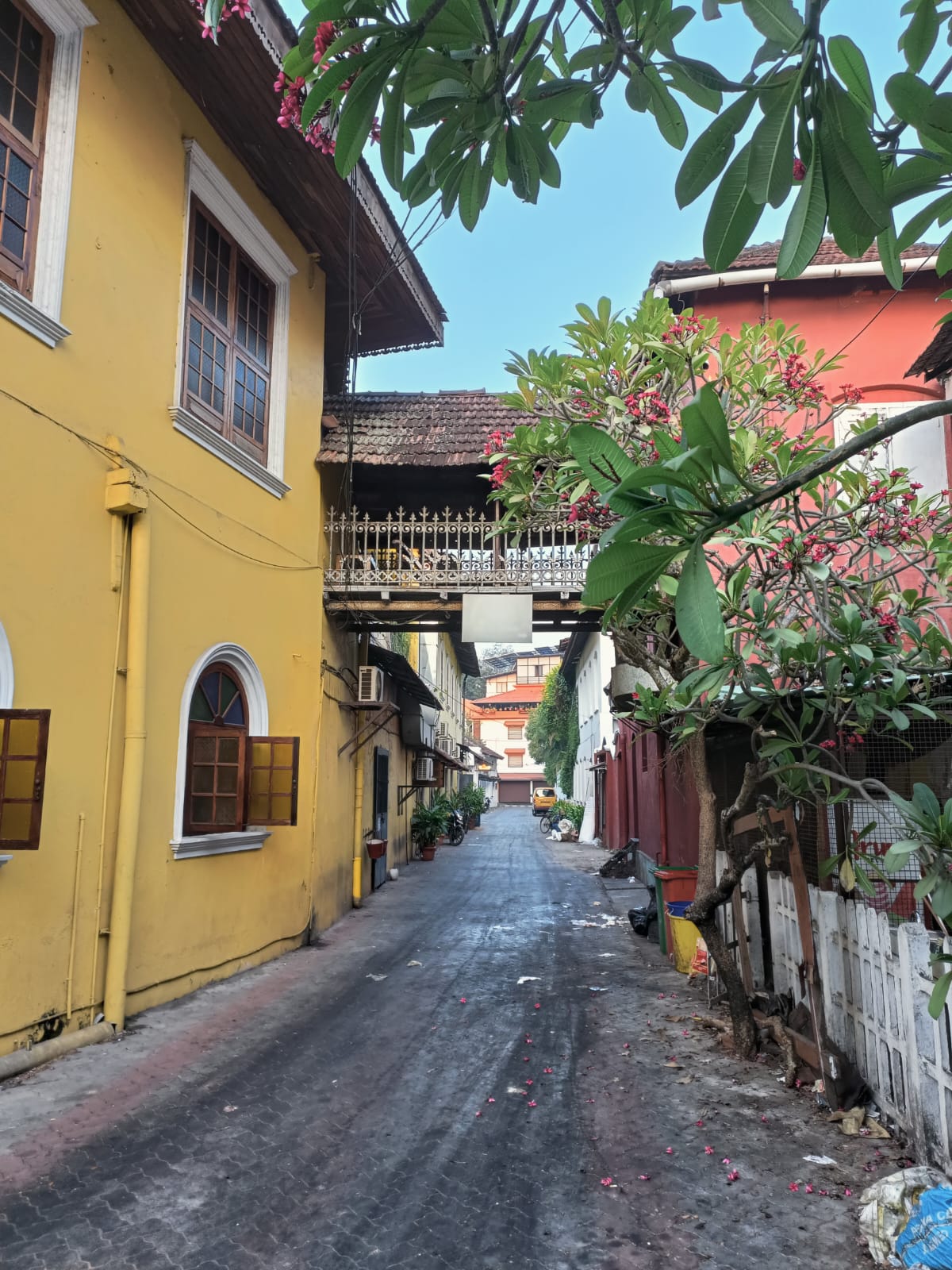
Stomachs filled we wandered around the quiet streets of Fort Kochi until it was time to meet our walking tour guide at St Francis CSI Church. Under the cool confines of the stone walls of the Church (where the infamous Vasco Da Gama was once buried) we began our deep dive into the history of Fort Kochi. Our guide regaled us with the inception and history of this highly lucrative trading port which suffered invasions from North Kerala, the Dutch, the Portuguese and then the British. Trudging onward out of the comfort of the church walls, we walked around the leafy shaded lanes of Fort Kochi marvelling at the magnificent Dutch architecture, the almost vehicle free streets, and visitors cycling the lanes with their daily wares. Every now and then we would stop and hear about the marvellous history of one of the many buildings and streets – the hanging Bridge made of railway lines connecting two Jewish households, the Forte Kochi hotel owned by a Jewish household (which still houses the Mikwah (a Jewish ritual bath), the Old Harbour hotel (which used to be the harbour for ships in the decades gone by), the Koder house (owned by another affluent Jewish family). Stopping at the infamous Chinese fishing nets, we saw the catch of the day being laid out, and visitors thronging the promenade. We marvelled at the Dutch cemetery and the beautiful overflowing history of the streets, and ended our walking tour with idliappams, and a visit to the glorious Santa Cruz basilica (which used to be an armaments warehouse for the Dutch and the Portuguese).
After a quick rest at Mai House, we stepped out for a lip-smacking meal of Pazhampori Beef (legend has it the steamed banana called pazhampori was introduced to combat the spiciness of the beef) and coconut milk infused vegetable curry topped with Kerala parathas at a small delightful restaurant. Walking past empty streets with travellers going home for the night, it felt like we were in Europe.
February 14, 2024
Deciding to make an early start to the day, and rent bicycles, we walked to the MyByk stand right next to the fishing nets of Fort Kochi. MyByk is a fantastic app which allows you to rent cycles for a few hours, days or weeks and the wonderful part is MyByk stands are scattered throughout the city, where you can drop off your MyByk and collect a new one.
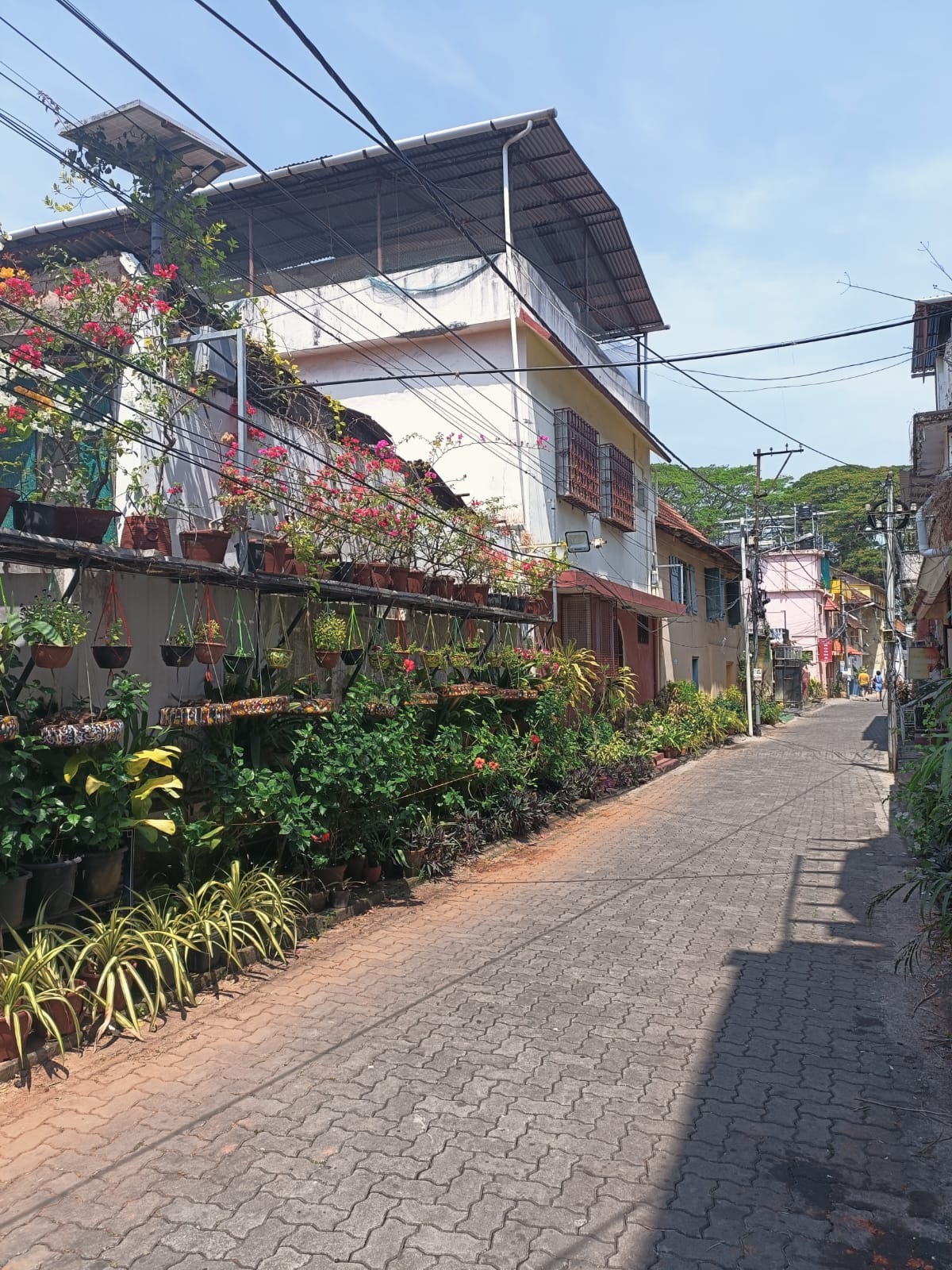
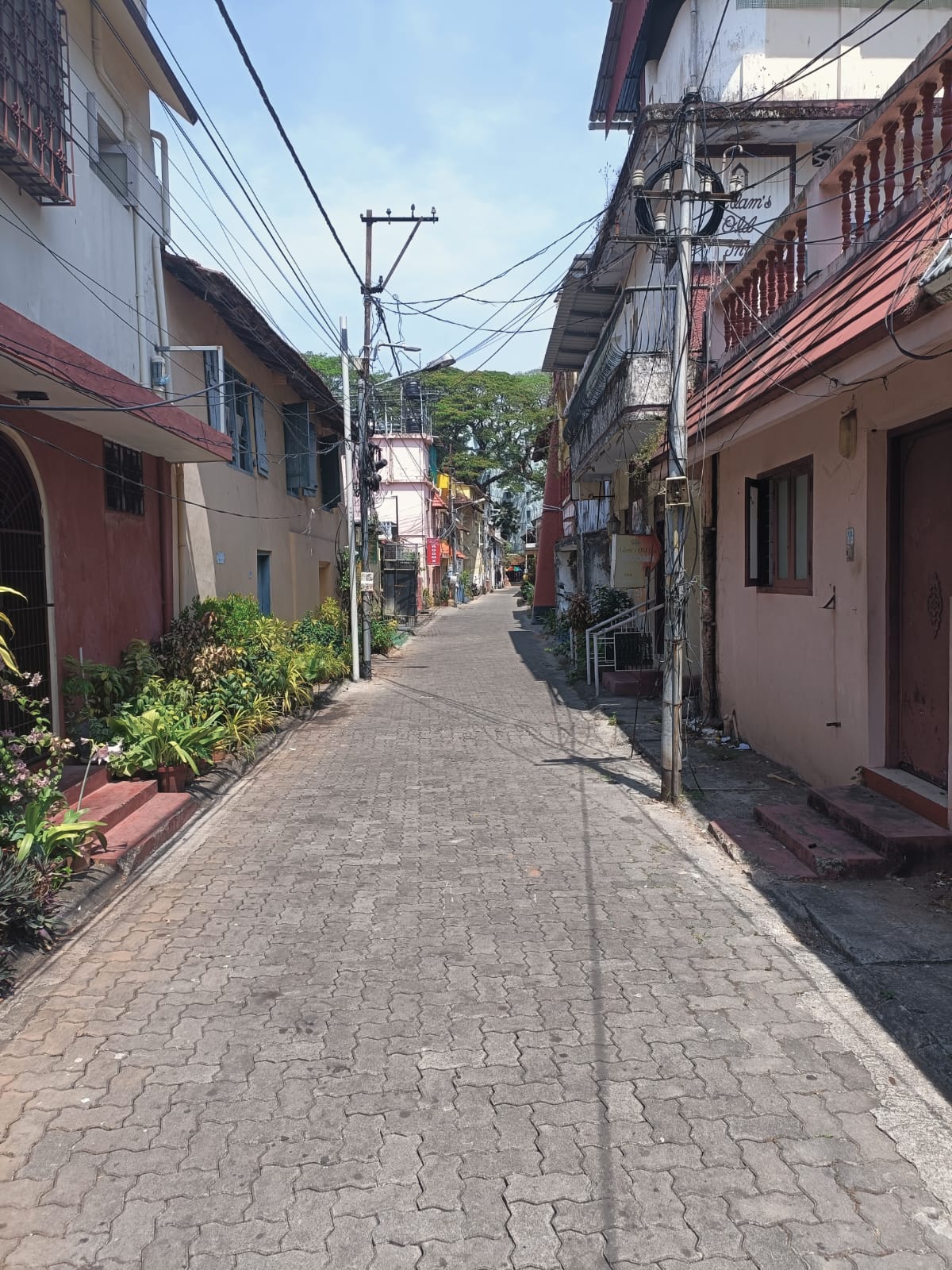
Exploring the inner streets of Fort Kochi early in the morning before the city has fully woken up is surreal – traffic free narrow lanes with quiet two storied bungalows, trees and a cacophony of flowers, plants and creepers with the occasional walker, the birds in the distance and the whirring of the pedals of our bikes. It was hard to believe we were in the city. We pedalled towards the Chinese fishing nets (which is the more commercialised area) and past the pier where morning sights of fishermen bringing in their catch, setting up shop for the day, morning walkers on the promenade, and in the distance, the ferry making its way to the other islands caught our eyes. Pedalling onwards, we made our way to the ferry docks, where locals in bikes, cars and pedestrians were waiting in line to take the ferry to Vypeen Island (also a fully functional island), and vowed to be there bright and early the next morning. After a hearty breakfast, we made our way to Matancherry (the spice centre of Kochi in the years gone by). Walking past lines of shops selling spices, clothes and knick knacks, we made our way to the Jewish synagogue. Paying a small entrance fee, we marvelled at the Chinese blue and white floors covering the flooring, the magnificent chandeliers, the imposing altar and the architectural interiors of the synagogue. Browsing through some local shops displaying paintings of local artists of the wonderfully preserved and retained architectural brilliance of Jew Town, the scorching Kochi heat got too much and we proceeded inward for shelter. Evening was spent watching the magnificent warriors display their Kalaripayattu skills at the infamous Kathakali centre in Kochi.
February 15, 2024
After a relatively quiet evening (by our standards) the previous day, and attending a beautiful service at the Santa Cruz Basilica, we woke up early, ready for our trip to Vypeen Island. Picking up bikes at MyByk, we rode towards the ferry docking point, and buying tickets, stood with the long line of bikes waiting to board the ferry. First on board, since we were one of the few cyclists on that ferry, we moved to the end of the ferry gazing at the vast expanse of water before us, with the egrets sweeping in and the lone fishing boat. After a 10 minute wait once the ferry was full, we were off. Feeling like a local, I was excited to be off on this mini adventure. 10 minutes ahead and we docked at Vypeen island – the locals were on their bikes, and seamlessly as soon as the ferry docked at Vypeen island rode off. We moved off to one side to get our bearings and find our way around so we wouldn’t get trampled by the busyness of the locals on bikes who would wait for no one to go.
Biking a short distance, we came across a narrow road and decided to take it. Cycling past a narrow cobbled street we came across a beautiful white church with beautiful bungalows lining the courtyard of the court and a chinese fishing net with a promenade at the end. Parking our bikes, we climbed two steps to a sit out area just in between two chinese fishing net structures and watched a lone fishermen on the beach path below casting out his nets. Other than the occasional walker along the promenade, the place was deserted. After soaking in the quietude and serenity of this side of the island (in stark contrast to the busyness of the Fort Kochi chinese fishing nets), we decided to walk the length of the promenade (basically wooden planks laid out around the route of the fishing nets). Beautiful well maintained bungalows dotted one side and every 50 metres or so there was a long walkway leading to every Chinese fishing net structure. Chancing upon the only functioning Chinese fishing net, we decided to venture to the end of the pathway just to look at the nets up close and take the customary pictures without throngs of tourists and commercialisation in the background. Wandering on the very narrow path of sand we sat in and watched the fishermen operate the Chinese fishing net to our right. egrets perched on the beach, awaiting with bated breath, as the human operated large net went into the water – 15 minutes later the net was up with scarcely few fish, with the egrets attacking the nets with ferocity and fishermen shooshing them away. Gentle waves lapped upon the shore, with us and the fishermen being the sole inhabitants of this marvellous untouched lap of nature – the blue skies with the sun just waking up, the white egrets flying overhead and tottering along on the sand, the mechanical click of the fishing nets and the occasional ferry with voices carrying across the water, we sat on the beach taking it all in – the fact that this was just a 10 minute ferry ride away and within a city amazed us.
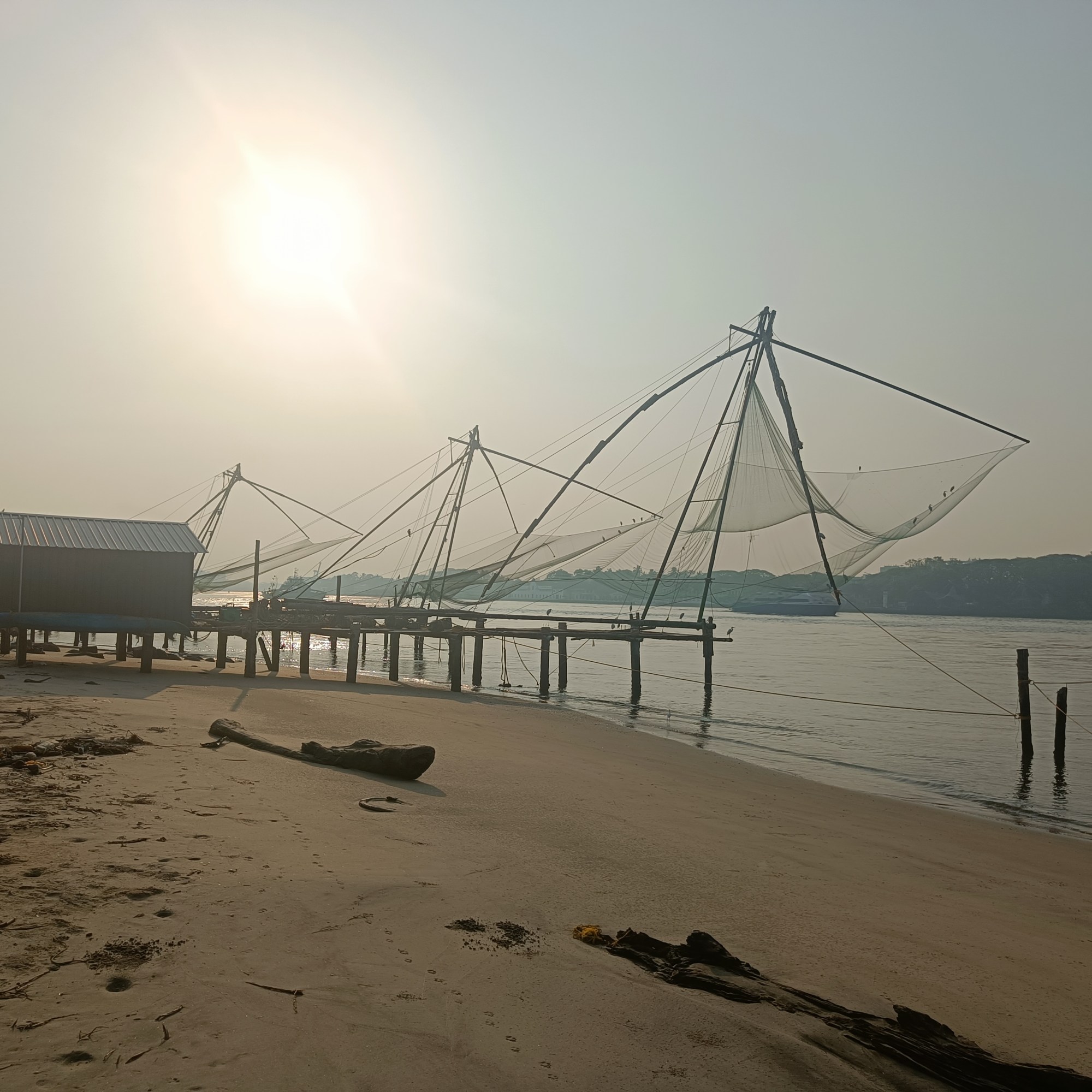
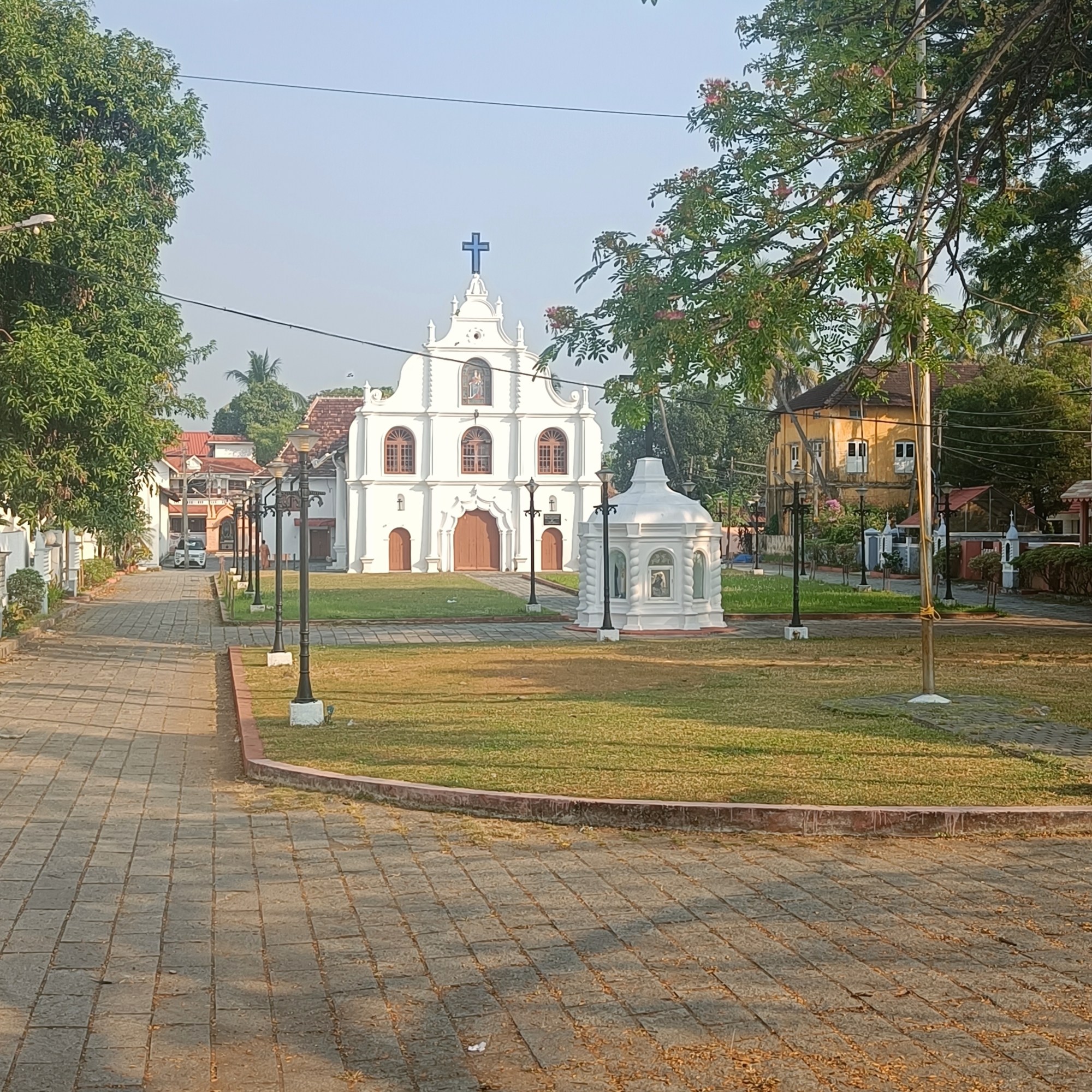
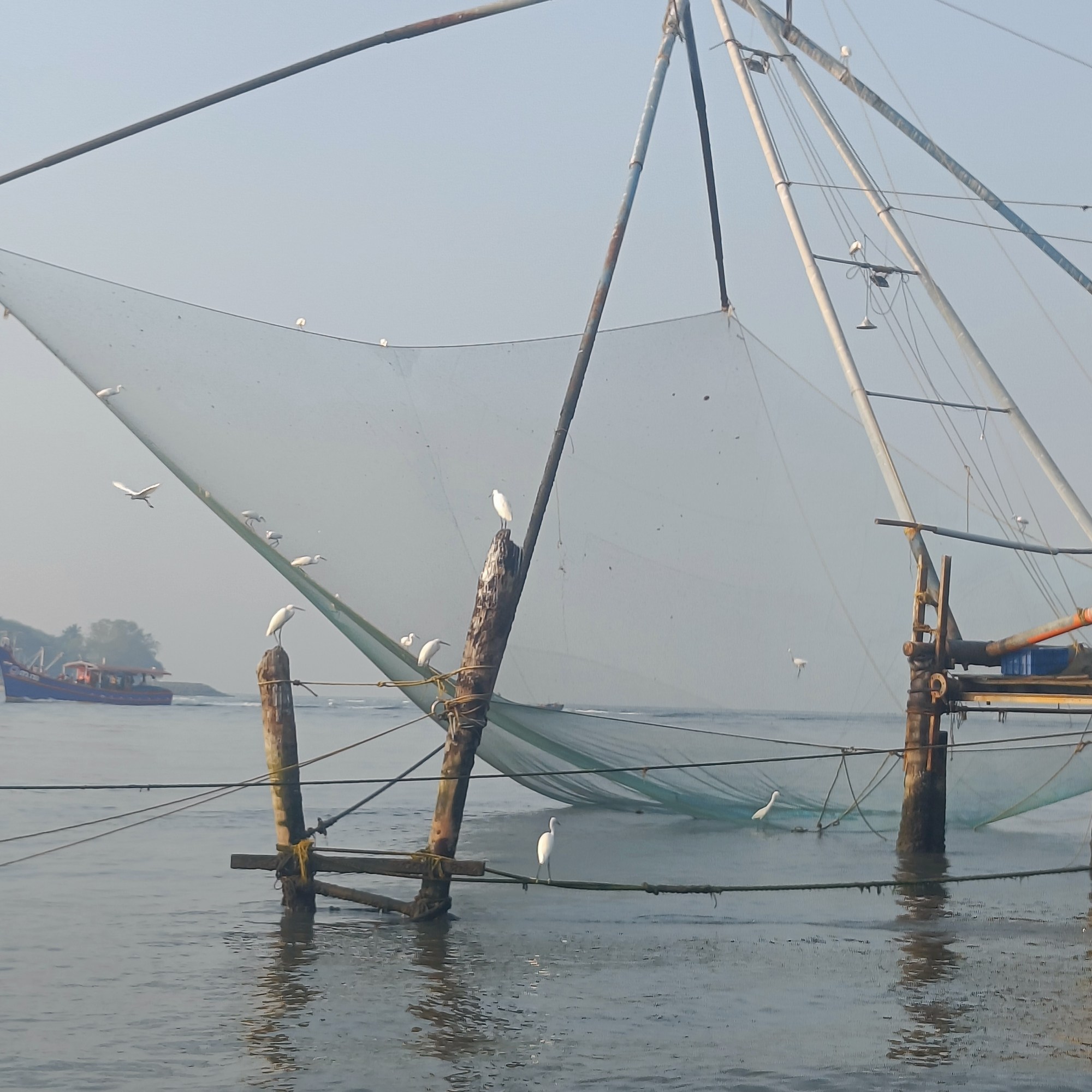
After spending time on the shore, our restless legs urged us to walk further, and we walked to the end of the promenade to a narrow inlet where 2 fishermen were just bringing in their catch for the day, and where the cove met with the larger sea – this was heaven. Walking back to our cycles, we decided to venture past the church into the narrow streets surrounding the area, and pedalling through paths for single walkers we drove past elegantly designed houses with backyards and complete solitude as the inhabitants woke up and got going for the day – children on their way to school, people on their way to work, people cleaning their backyards and watering their plants greeted us. It was like we were transported to another place. What we loved the most was the absence of throngs and hordes of people and chaos and the ability to just be. Making our way back to the ferry, we promised ourselves we would be back soon to just take in nature in all its wonder. Boarding the ferry to go back, our explorer souls felt a little more settled and joyous at this slice of heaven we had experienced.
Spending the rest of the day exploring the streets of Fort Kochi with our trusted cycles, we retreated back to the hotel, for a nap. Our evening was spent at the Kathakali centre watching the actors self painting their faces in a truly creative fashion. Much to our dismay, we were seated at the far end of the balcony, and I, together with 2 other novice Kathakali performance viewers, who are also disadvantaged because of our height, hoisted ourselves to sit on the backs of the seats perched atop several floor cushions to watch the mesmerising Kathakali performances.
—————————
 Chronicles of an overthinker